
Kimball, Nebraska: Such a busy day, beginning with a tour through the State Park where we camped last night (but where everything was closed by the time we arrived yesterday). This fort has been through so many renditions, it is difficult for this old gal to keep track of everything. Seems Fort Robinson was used for supplying Natives during treaties, was used to supply American soldiers for expeditions, helped white settlers on their way west... but it seemed to me to only main goal was to "curb" the native population and herd them onto reservations with treaties the Indians did not want or follow. We can gloss-over history, but it is all still very ugly.
Quick - possibly not chronological correct - timeline:

one of many tribe member photos in the museum
In May of 1877, famed Sioux warrior Crazy Horse surrendered 900 members of his tribe at Camp Robinson. (Interestingly enough, Crazy Horse always refused to have his photo taken, and there are only a few drawings, so no one really knows what he looked like!) A few months later, in September, Crazy Horse was killed while trying to escape. Fort Robinson is best-known as the place where Crazy Horse died.
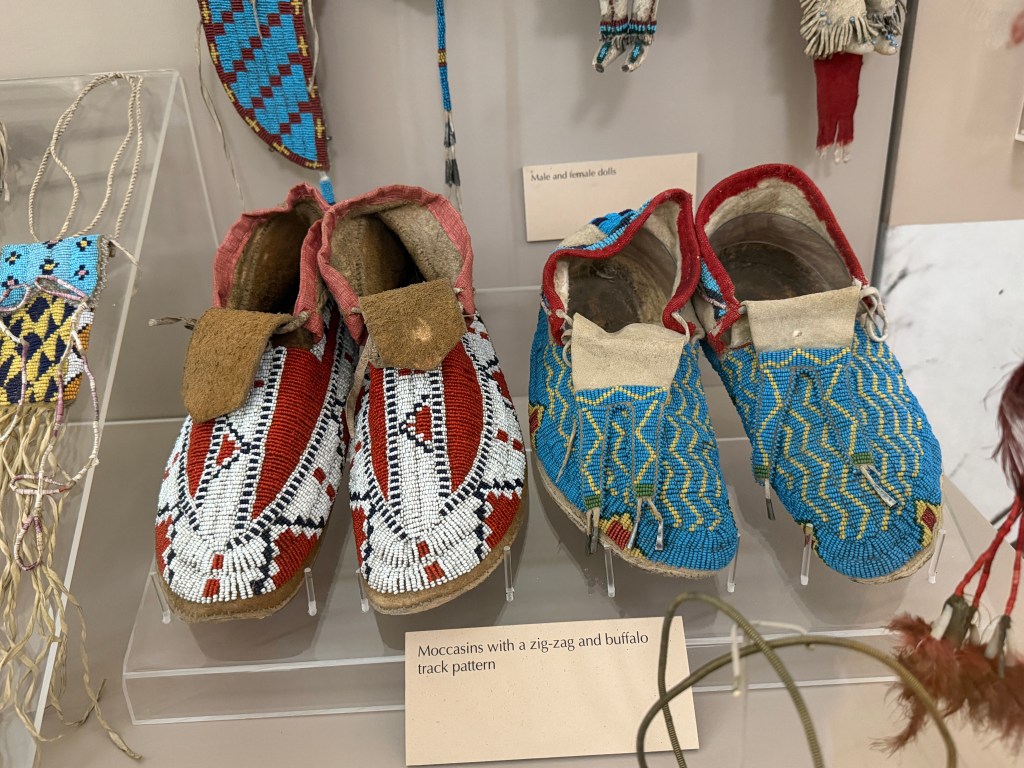
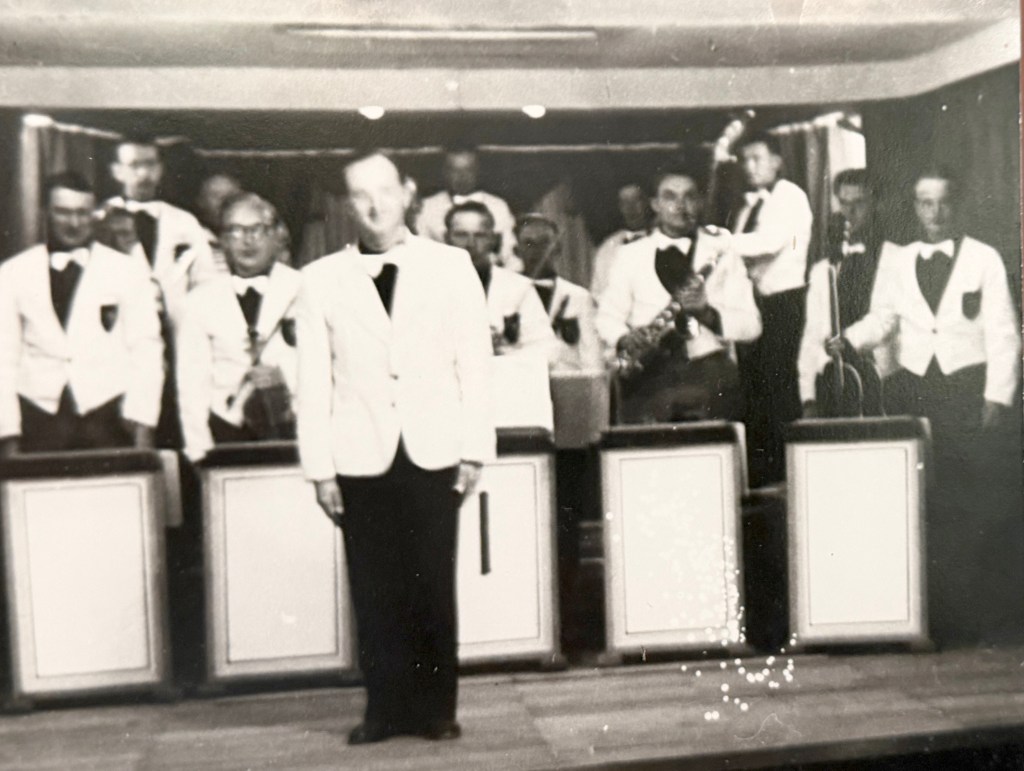
It seems after the US Army had tamed/eradicated all the pesky Indians, the fort was used to help white settlers heading west on the Oregon Trail, and in 1886 the railroad came through town and the fort expanded, becoming a calvary and supply post. Fort Robinson was a huge supplier of horses for the US Army in the Spanish War, and was the US Olympic Equestrian team training station for the 1936 (Berlin) Olympics. When horses were no longer needed in war, the post became a dog training station for WWII, and the horses were killed to feed the dogs at the fort! In 1943 the fort was used as a WWII POW camp for German soldiers.
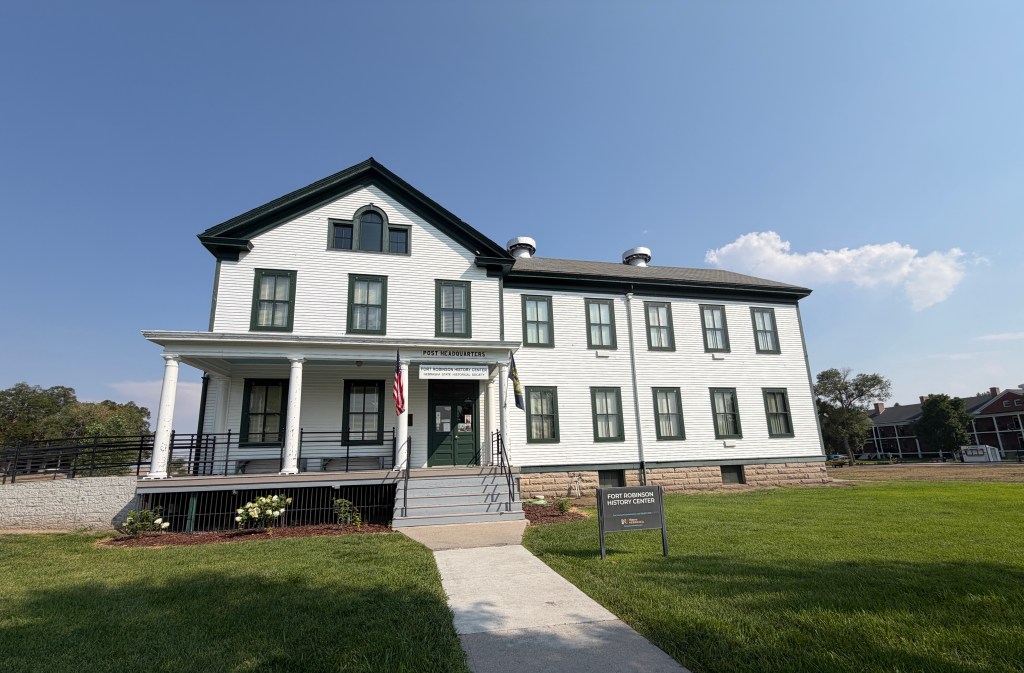
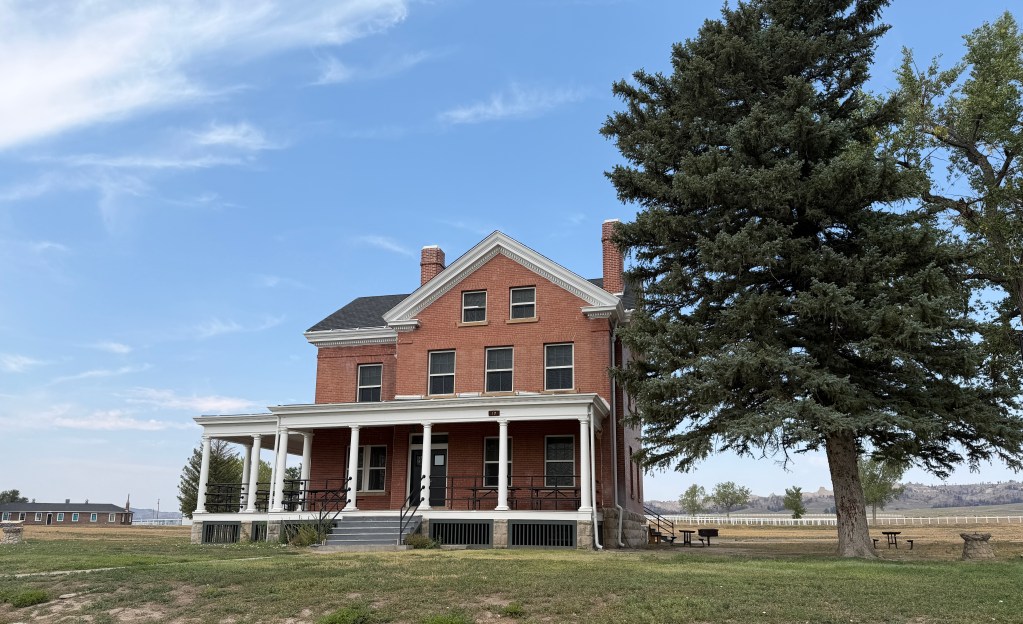
This building (above) housed the commander's office, telephone exchange and an ornate auditorium for parties and balls on the second floor. It is now the historical museum.
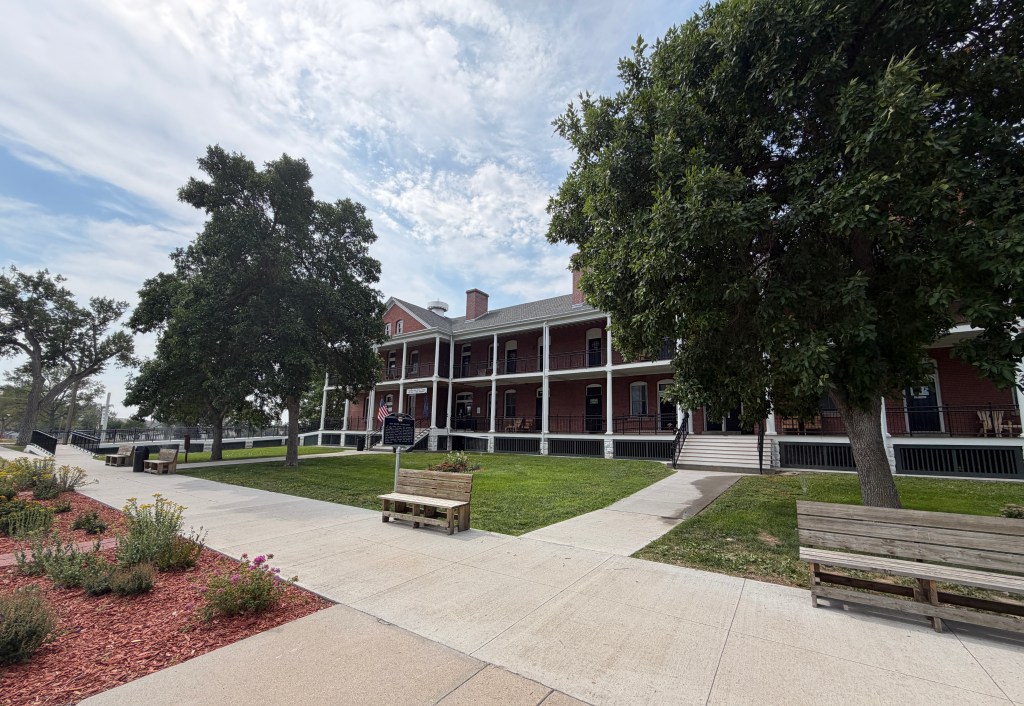


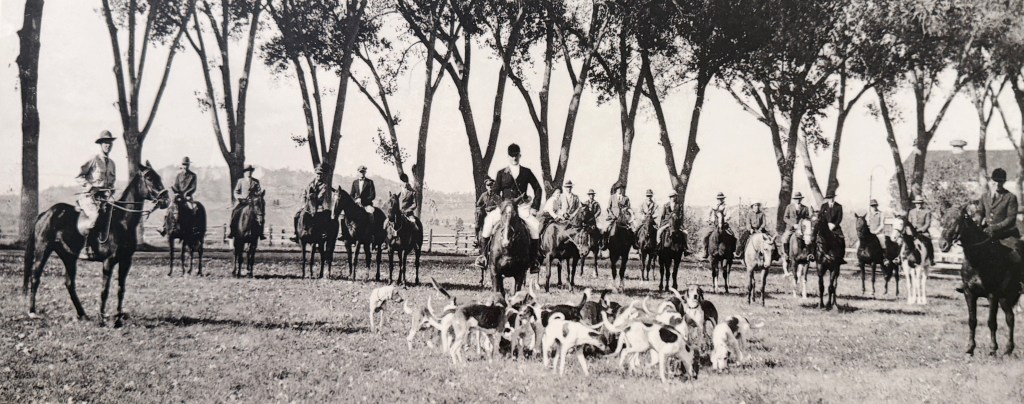
While training horses for wars, the officers had polo matches and fox hunts.

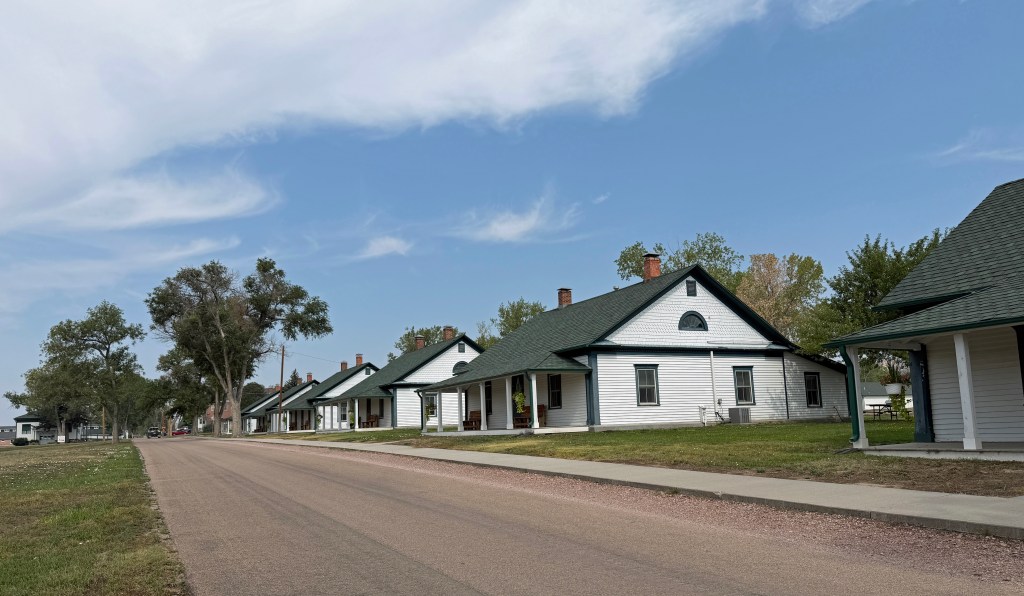
Now the grounds are mostly a tourist site. The officer quarters and barracks are hotel rooms. The stables serve tourist horse travelers and trail riders. There is a water park!
But we had places to go and things to see, so pointed the Petit Peregrinus south again on Highway 71, and were soon in Nebraska. We stopped to tour Scotts Bluff National Monument. These huge bluffs were a very welcome site for travelers headed west - fur trappers, Mormon pilgrims heading to Salt Lake City, California gold-rushers and Oregon land-seekers.
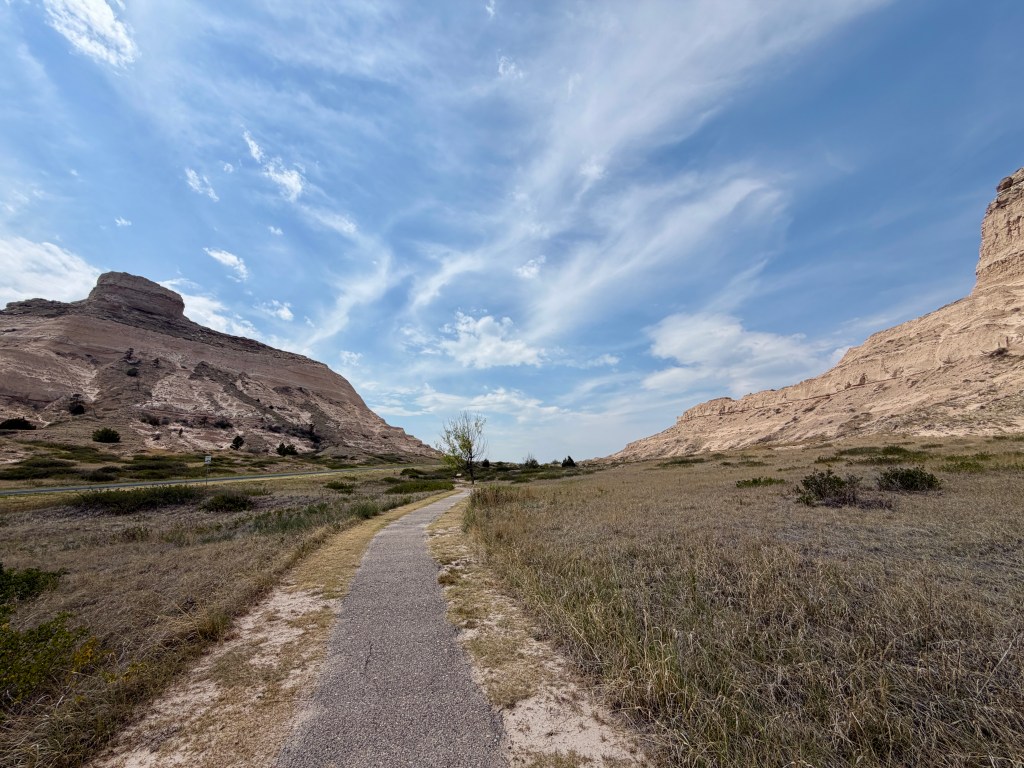
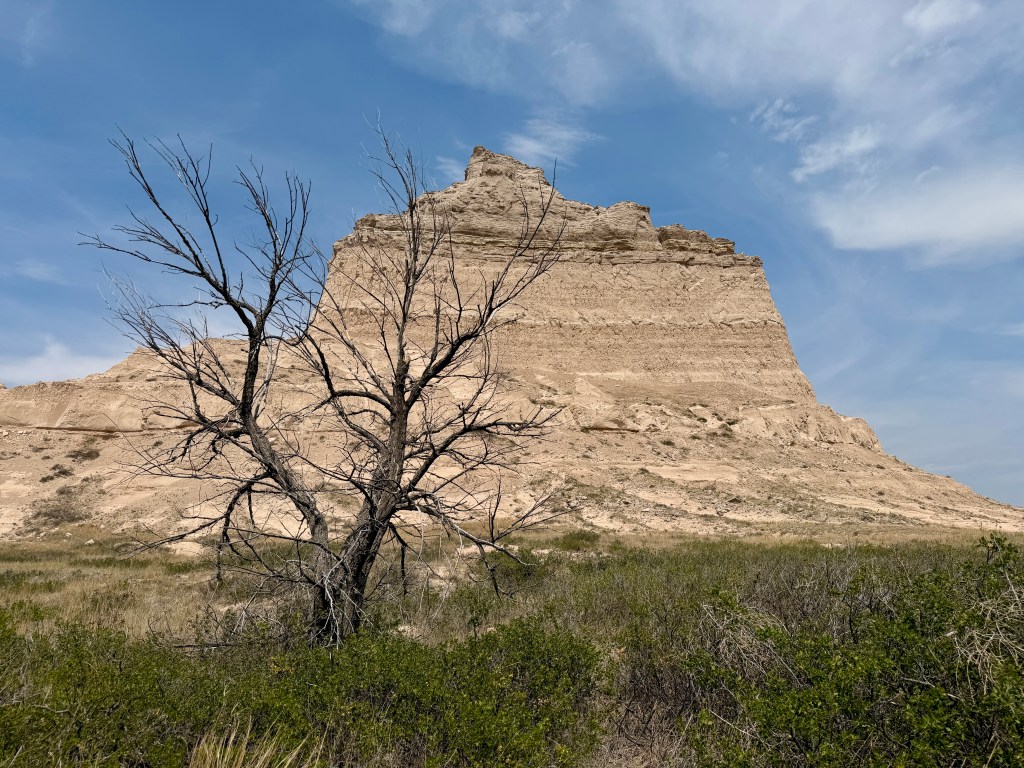
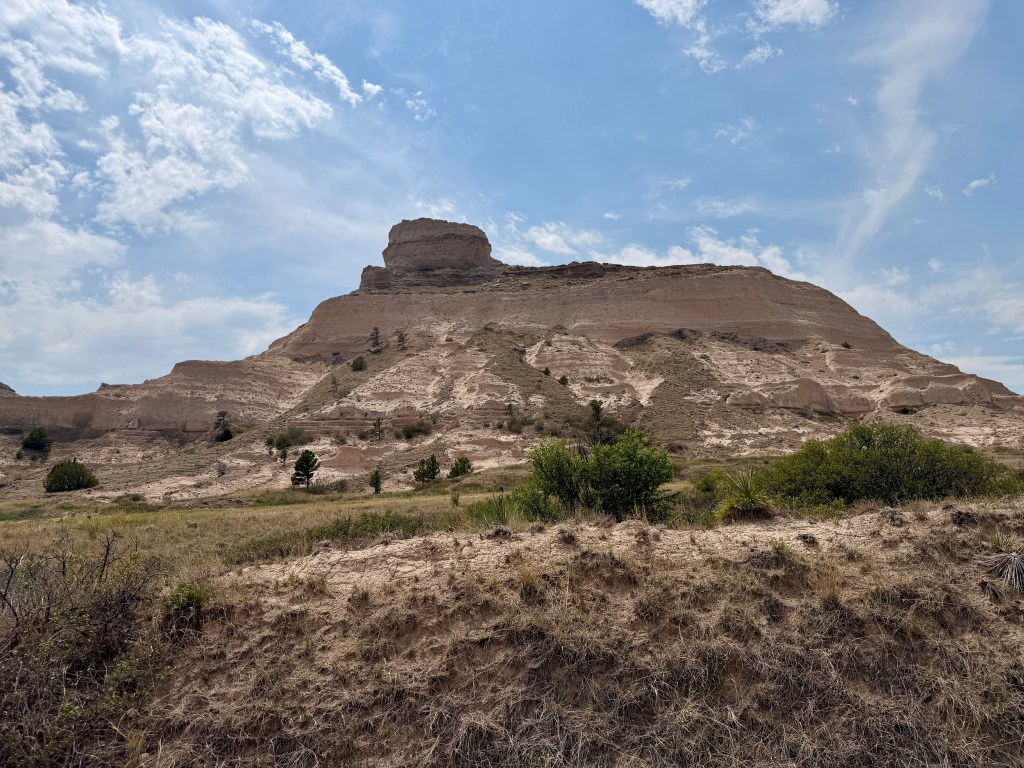
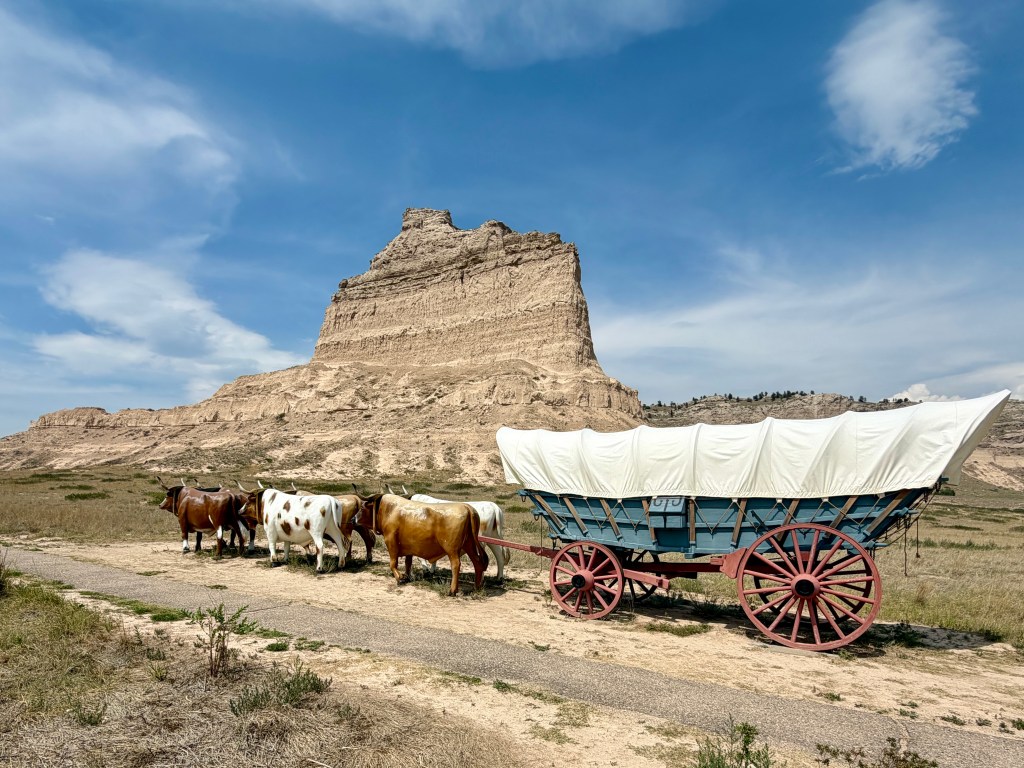
After looking through the visitor center and watching the informational video, we walked out to the opening between the two bluffs. The Parks Service has three "stunt" wagons and even a few plastic oxen so visitors can really get a feel for what it would have been like to travel EIGHT MILES a day to the west.




But, we had to travel on, wondering what a pioneer would think of our "covered wagon" because we had this to deal with:

Only twenty miles from Scottsbluff (the town is one word) is another rock formation recognized by pioneers (they see it before Scotts Bluff) - Chimney Rock National Historic Site. We stopped here for a brief while. It was 100° and a storm was approaching.

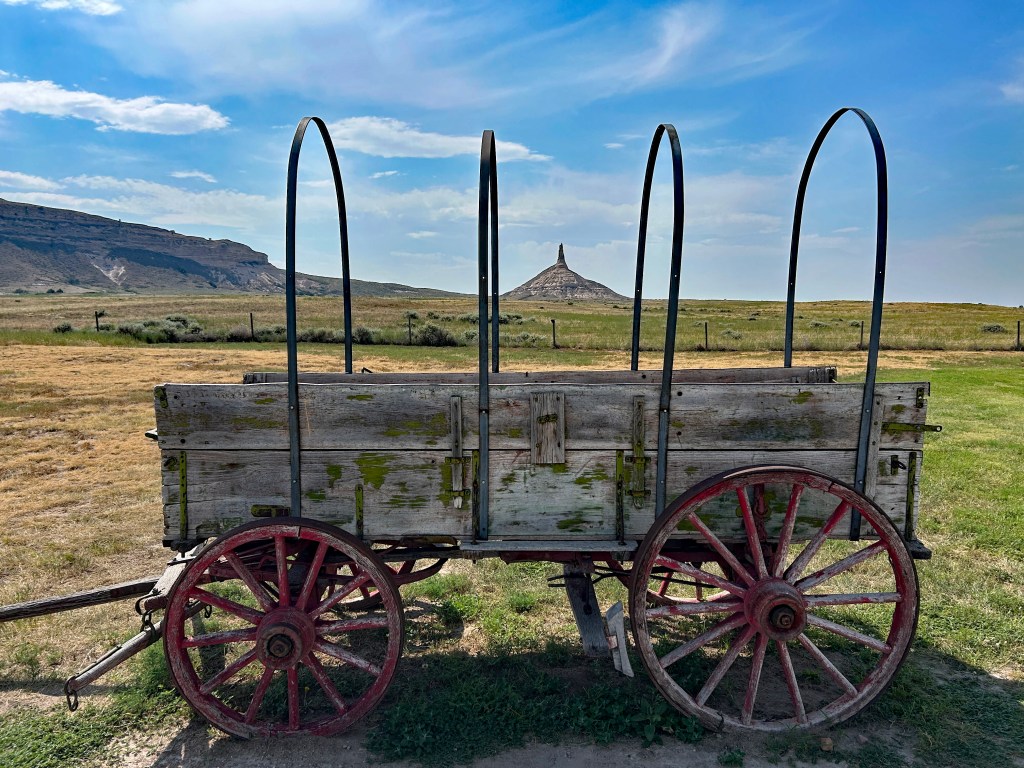

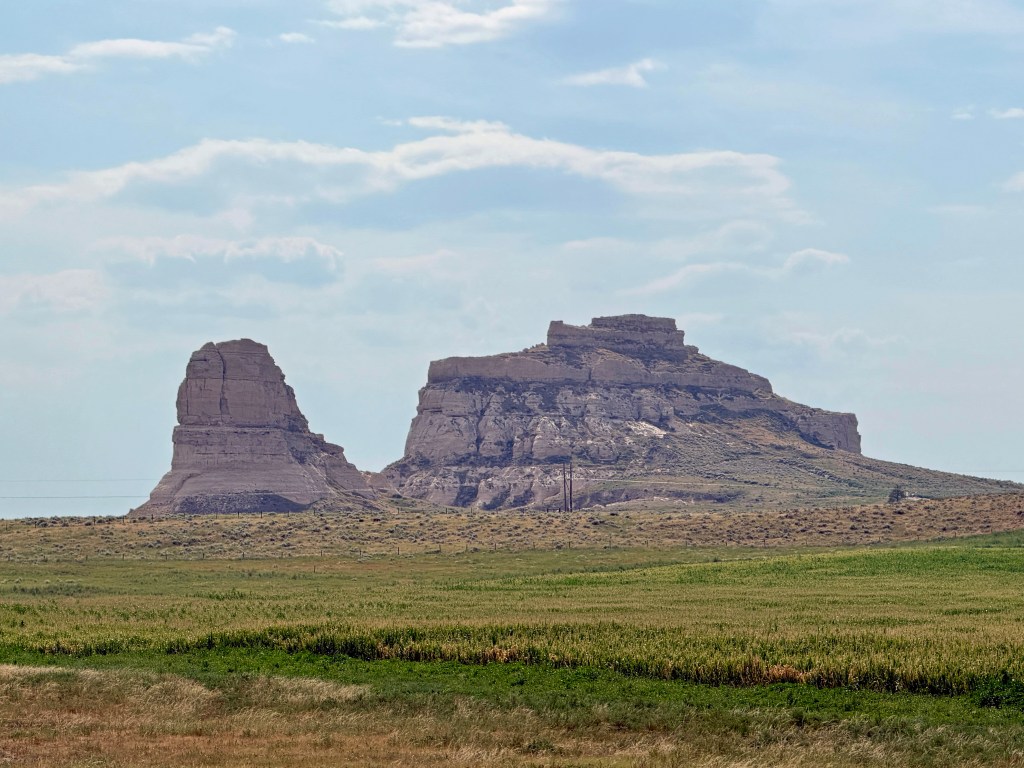
But wait - there's more! There are two other formations in the area recognized by pioneers: Jail and Courthouse Rock (no visitor center, just two lumps out in the plains).
We continued south - through blustery conditions, but never had rain. At I-80, we pulled into the first RV park we found. I made quesadillas and called it a night. All this, and we only drove about 180 miles!
Until my next update, I remain, your Nebraska correspondent.
Campground Information: High Point RV Park - because we are near Panorama Point, the highest point in Nebraska, 5429 feet.